6 Types of Declaration
Orientation
You expect to be taken seriously and are ready to approach the other party in a social conventional way.
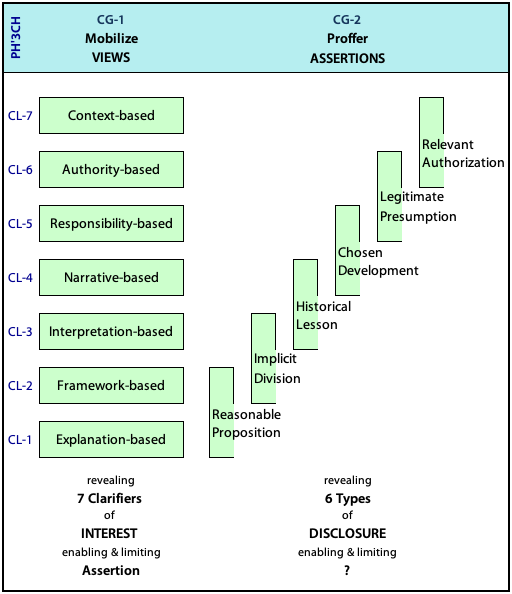
This approach initially requires public of your thoughts and wishes, and it necessarily leads to self-exposure.
Remember: The function of any is to present oneself to another so as to make a connection that may offer future compatibility.
When you approach, you must be prepared for a range of responses beyond simple agreement—including an alternative view, a misunderstanding, re-framing or direct rejection.
Because you seek a connection, you must be ready to adjust your thinking and style of interaction through polite constructive dialogue. Those adjustments form the first hints as to likely compatibility.
CG21: Reasonable Proposition
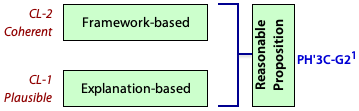
Function: To enable an exchange with a suggestion or conclusion that deserves consideration.

Your Exposure:
Whatever you say enables the other party to make an assessment of your grasp of the situation and the quality of your judgements about it.
CG22: Implicit Division
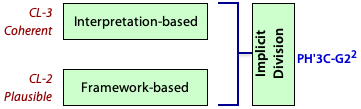
Function: To propose that there are two sides with the potential for polarization and conflict.
Your Exposure:
You may be publicizing something that the other party avoids noticing or wants to keep hidden.
You may open yourself to pressure to align with one or other side or to state your alignment or non-alignment.
CG23: Historical Lesson
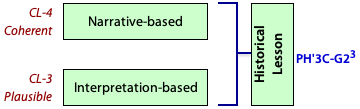
Function: To propose that guidance for the future should be based on events in the past.
Your Exposure:
Your position on past events may be biased or controversial.
Your implications may assume values that are not shared.
CG24: Chosen Development
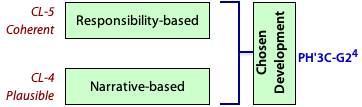
Function: To propose a feasible future state of affairs that incorporates personally desirable values.
Your Exposure:
You will reveal:
► your attunement to current realities and practicalities
► your current priorities and desires, and
► how you envisage these two positions interacting.
CG25: Legitimate Presumption
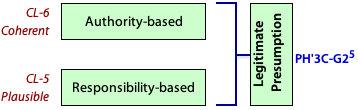
Function: To propose a socially recognized rule or way of functioning that no-one should reject without good reason.
Your Exposure:
You will reveal your awareness of standards and conventions and your reliance on past experiences with these.
CG26: Relevant Authorization
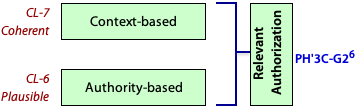
Function: To propose that what applies in a particular situation is backed by an appropriate authority.
Your Exposure:
You will reveal what you think the situation calls for, as well as your appreciation of the relevant authorities and how they should be used.
- Further analyses of the dyadic disclosures.
Originally posted: 6-Oct-2026.