Two Domain Types: Scalar & Categorical
Primary Hierarchy Differences
 Click here to be reminded of Root Levels emanating the 7 Primary Hierarchies.
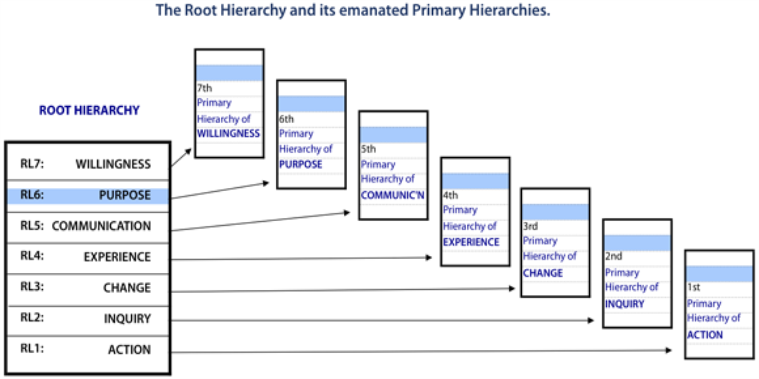
Click here to be reminded of the 7 Primary Hierarchies.
During this multi-decadal investigation, the and domains resisted penetration until very recently. It is now apparent that they are linked and reveal a distinctive difference.
Primary hierarchies in 4 of the other domains——have elemental levels that function as definite states or structural switches. The elements are present or absent, activated or inactive, on or off. We label these Domains as categorical.Detail
By contrast, , , and have elemental levels that function on a continuum of intensity. When active, they can be more or less energized, show major or minor forcefulness, have high or low intensity. We label these Domains as scalar.Detail
Explanations
PH3 & PH7
can range from total reluctance through a gentle resistance to a mild positive and onwards up to an intense wholehearted state, and this applies to all its levels. Willingness is the delivery mechanism for psychosocial energy and it is reasonable to see that flow as being variable in nature.
is the disturbance of an established state which otherwise continues based on inner inertia. The degree of personal inertia and establishment will vary and therefore change will possess magnitude, rate and scale. Compare minor superficial alterations () with radical structural alterations (also ).
Taken together, it appears that is the internal potential energy while is the actualization of that energy. Reluctance (little or no willingness) parallels inertia (little or no change).
There is another link between Willingness and Change evident in the forced reversal of their oscillating duality:
When Willingness-PH7 elements with their selflessness pressure have oscillation forcibly reversed, they convert to L3 elements with acceptability pressure and a framework for by-passing social resistance.
When Change-PH3 elements with their acceptability pressure have oscillation forcibly reversed, they convert to L7 elements with selflessness pressure and a framework for allowing self-recovery.
This is the only reciprocal pair:
PH4
As noted above, is also scalar in that elements like sensations, images, emotions etc can be more or less intense.
The function of Experience in endeavour as initially proposed in 2011 is to use inner states as a reference gauge, which confirms that it is not a static switch.
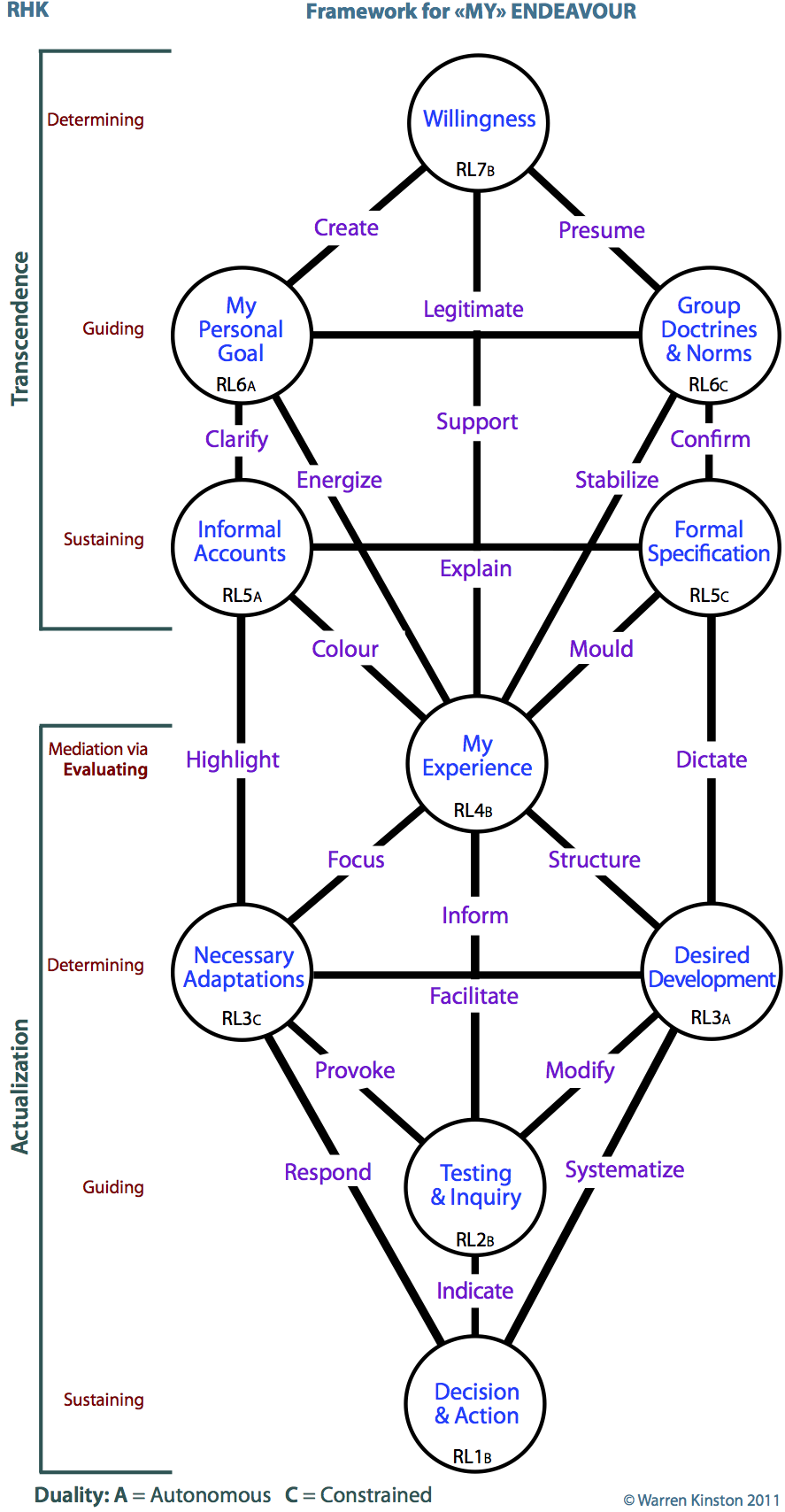
Click on the thumbnail to review the Endeavour Tree.
In considering the Endeavour Tree, it is noticeable that is the only Centre that receives flows of influence from the and from both . It also receives influences from all other Centres except . It is therefore not surprising that its nature is scalar.
What Type is the Root Domain?
The Root Domain is the Hierarchy of Endeavour. As it contains , , and , those levels will certainly be scalar.
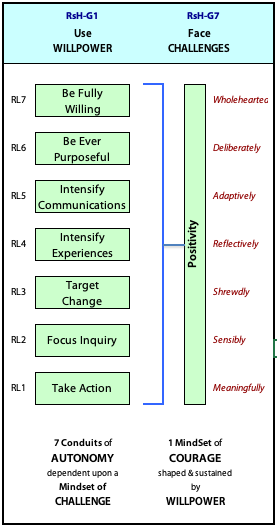
In general, endeavours can be pursued more or less intensively. That is what was determined in the study of creativity and shown in the —click on thumbnail to be reminded.
If we look at the other 4 root levels: at it is possible to more or less purposeful; at , it is possible to be more less communicative; at , inquiry can be more or less thorough; and at , there can be more or less activity.
In looking deeper within the Root Domain, this scalar quality is evident in the which can be pursued to a lesser or greater degree, and in the which can be adhered to more or less.
Conclusion: The Root Domain is scalar.
Originally posted: 6-June-2026.